What Is a Liquidity Sweep in Trading?
Why price so often pokes through the obvious high or low, and then turns around the moment you get stopped out.
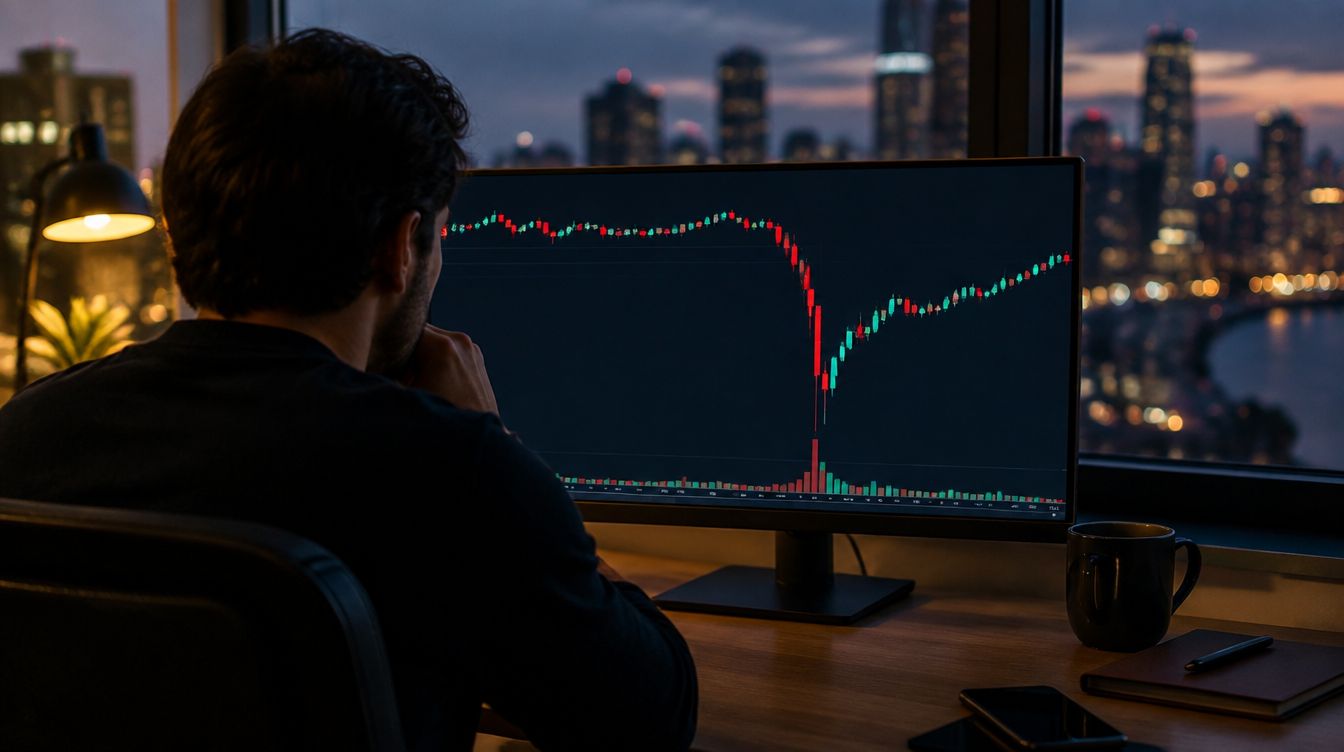
A liquidity sweep in trading is when price briefly pushes beyond an obvious high or low, triggering the stop-loss and breakout orders resting there, and then quickly reverses. The "sweep" collects that liquidity, and the reversal that follows is often a strong trading opportunity.
What "liquidity" means here
Large traders need other people's orders to fill their own. A fund that wants to buy a big position needs plenty of sellers, and the easiest place to find them is just below an obvious low. That's where long traders' stop-losses (sell orders) and breakout traders' sell-stops are sitting. Pushing price into that area briefly supplies the liquidity the big buyer needs.
How to spot a liquidity sweep
- Mark obvious levels: previous day high and low, session highs and lows, equal highs or lows, and clear swing points.
- Watch price trade through the level, often with a fast wick.
- Look for rejection: the candle closes back inside the prior range, leaving a long wick beyond the level.
- Confirm with structure: a break of a short-term swing in the opposite direction shows the reversal has started.
Liquidity sweep vs breakout
| Liquidity sweep | Genuine breakout | |
|---|---|---|
| After breaking the level | Snaps back inside the range | Holds beyond the level |
| Candle shape | Long wick, close back inside | Strong body close beyond the level |
| Follow-through | Reverses | Continues |
How traders use liquidity sweeps
Many traders won't take a reversal trade until a sweep has happened, because it shows trapped traders on the wrong side. A typical plan: wait for a sweep of a key level, wait for a market structure shift, then enter on a retest of the order block or breaker block that formed during the reversal. Put the stop beyond the sweep wick, and target the liquidity on the opposite side of the range.
Limitations
You only know a sweep was a sweep once price reverses. Plenty of "sweeps" turn into real breakouts, especially around major news. Always define your stop before you enter, and keep the size small until the reversal is confirmed.
Common questions
Is a liquidity sweep the same as a stop hunt?
They describe the same price action. "Stop hunt" implies someone targets stops on purpose; "liquidity sweep" simply describes price taking out the orders resting at a level.
What's the difference between a liquidity sweep and a liquidity grab?
Most traders use the terms interchangeably. Some call a quick wick a "grab" and a deeper move with a candle close beyond the level a "sweep".
Which markets show the clearest sweeps?
Highly liquid markets like index futures (NQ, ES), major forex pairs and gold, especially around the London and New York opens.
This guide is for education only and isn't financial advice. Trading involves risk, so practise new ideas on a demo account first.