What Percentage of Day Traders Make Money?
The famous '90% lose' line is folklore. The real studies are even tougher, and more useful.
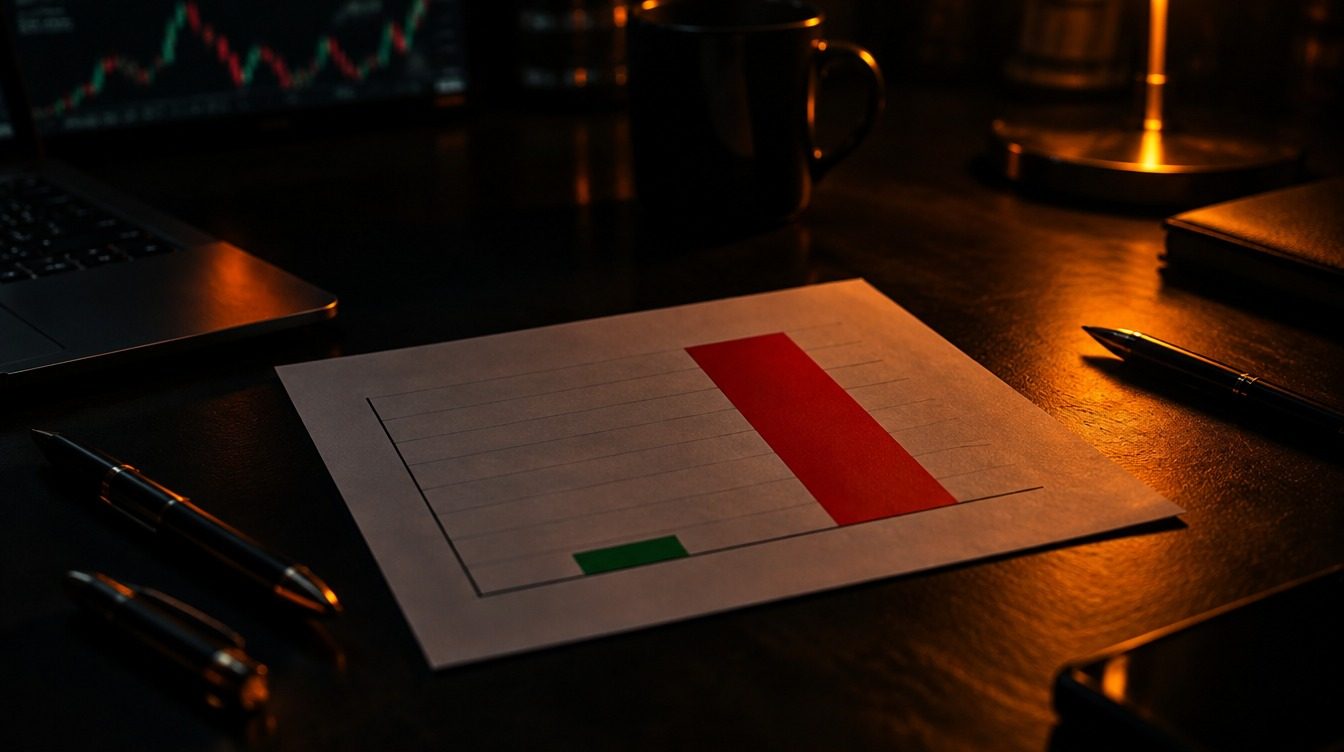
Research using complete exchange records suggests that only around 1% to 3% of day traders make consistent profits after costs. A large study of Brazilian futures day traders found that 97% of those who traded for more than 300 days lost money, and a long-running study of Taiwanese day traders found that fewer than 1% could earn predictable profits year after year. The numbers vary by market and period, but every serious study points the same way.
What the main studies found
| Study | Market and data | Key finding |
|---|---|---|
| Barber, Lee, Liu & Odean (Taiwan) | Every day trade on the Taiwan Stock Exchange over many years | Fewer than 1% of day traders earned predictable, persistent profits after fees |
| Chague, De-Losso & Giovannetti, "Day Trading for a Living?" (Brazil) | Individuals day trading mini-index futures, 2013–2015 | Of those who persisted 300+ days, 97% lost money; about 1% earned more than the minimum wage |
| ESMA product intervention (EU) | Retail CFD accounts across European brokers | Typically 74%–89% of retail CFD accounts lost money |
The European figures are why UK and EU brokers must show a risk warning with the percentage of their own retail accounts that lose money. The FCA explains the background on its contracts for difference page.
So what percentage of day traders are profitable?
It depends what you mean by "profitable":
- Profitable in a given month: a much bigger share, because anyone can have a lucky month.
- Profitable over a year: a minority. CFD disclosure figures suggest roughly one in four or fewer.
- Consistently profitable over several years, after costs: around 1% to 3% in the best data available.
- Earning a living wage from it: lower still.
The SEC has warned for years that most individual day traders suffer severe losses in their first months; see Day Trading: Your Dollars at Risk.
Why do so few day traders make money?
- Day trading is close to a zero-sum game before costs, and negative-sum after commissions, spreads and slippage. You need to be better than the average participant, which includes professionals and algorithms.
- Frequent trading multiplies costs. A small edge per trade can disappear entirely once fees are counted.
- Risk is usually too large. Many accounts are lost through a handful of oversized trades rather than a long series of small losses.
- Untested strategies. Most new traders never measure their expectancy or profit factor over a large sample.
- Behaviour. Overconfidence, revenge trading and holding losers while cutting winners.
Why some sources claim much higher success rates
You'll find websites and course sellers claiming that a third or more of day traders make money. Those numbers usually come from one of three problems:
- Survivorship bias: surveying people who are still trading ignores everyone who lost and quit.
- Short time windows: measuring a single good month or year, when lots of traders get lucky.
- Self-reporting: people overestimate their own results, especially when costs and taxes aren't counted.
The studies above avoid these problems by using complete exchange or broker records for every trader, including the ones who gave up. That's why their numbers are lower, and why they're the ones worth planning around.
Is the "90-90-90 rule" true?
The saying that "90% of traders lose 90% of their money in 90 days" gets repeated everywhere, but it isn't from a study. It's a rough slogan. The real research is in some ways harsher: most people lose, and the ones who keep going for longer tend to lose more, not less. The useful takeaway is that persistence alone doesn't fix a strategy without an edge.
What do the profitable few do differently?
- They trade a defined edge in a narrow set of conditions, and do nothing otherwise.
- They size positions small relative to their account, typically risking well under 2% per trade.
- They track everything: costs, win rate, average win and loss, drawdowns.
- They adapt slowly, changing rules only on evidence from many trades.
- They use the right contract size. In futures, that often means starting with micros; see account size when trading NQ.
What it means if you want to try
The odds don't mean you can't succeed. They mean you should plan for the likely outcome, which is losing money while you learn. Treat the first year as paid education with a strict budget, trade tiny size, and give yourself clear criteria for stopping or switching to a slower style such as swing trading. Our guide to becoming a day trader lays out a structured path.
Common questions
What percent of day traders lose money?
Most of them. Depending on the study and the time period, somewhere between roughly 70% and over 95% of retail day traders lose money, with the higher figures for those who trade the longest.
How many day traders are successful long term?
In the best long-term data, around 1% to 3% are consistently profitable after costs.
Is it realistic to make a living from day trading?
For a very small minority. Most people who earn a full income from trading took years to get there, and many had another income while they built a track record.
Are futures day traders more successful than stock day traders?
Not in the data available. The Brazilian study, one of the largest, looked at futures traders and found very high loss rates.
This guide is for education only and isn't financial advice. Trading involves risk, so practise new ideas on a demo account first.